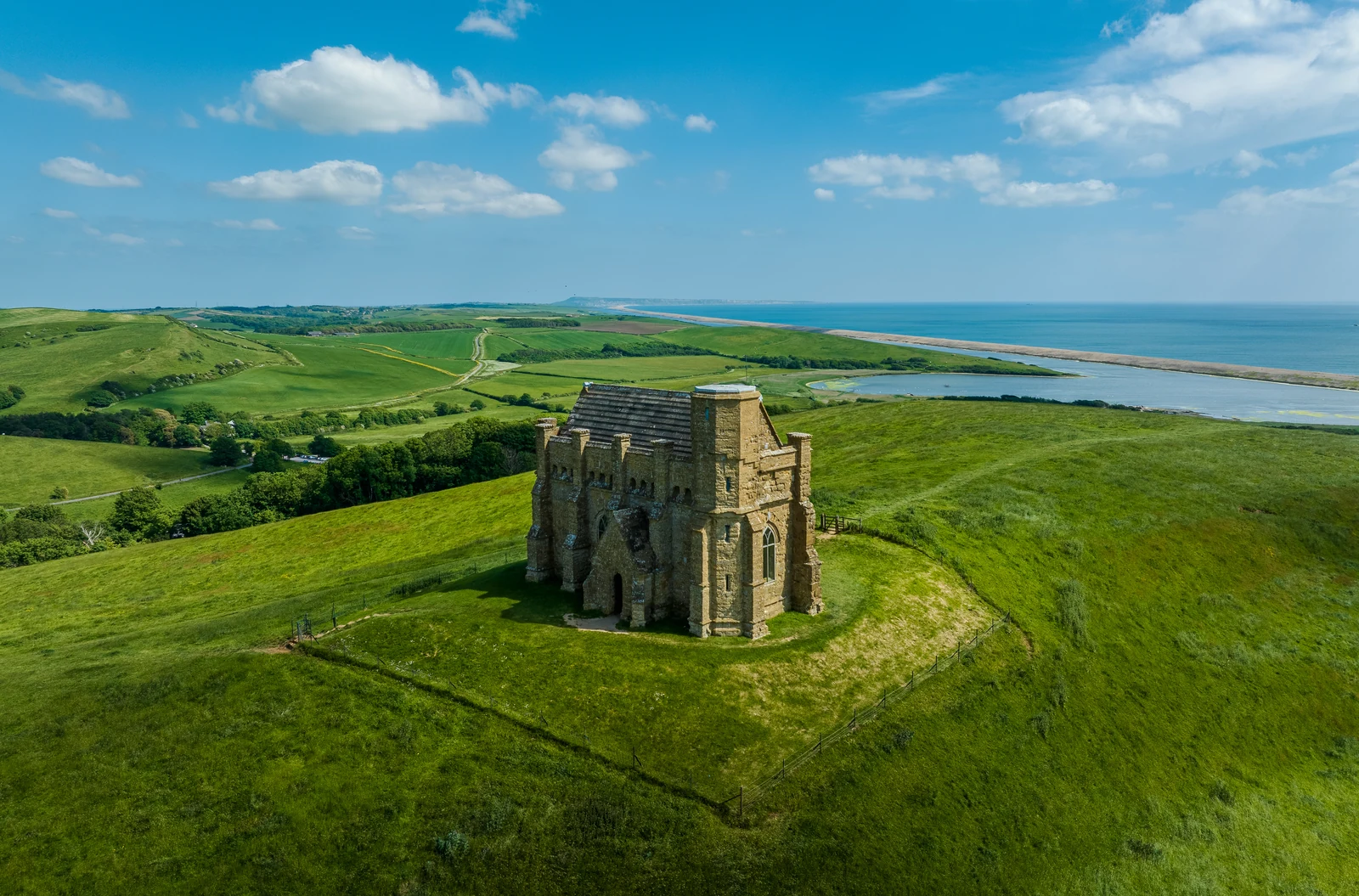
You climb a steep path out of the village of Abbotsbury on the Dorset coast of England. Wind off the English Channel. Grass. Sky. Below you, the long pale strip of Chesil Beach. At the top of the hill sits a small stone chapel - thick walls, almost no decoration, a simple rectangular plan. This is St Catherine's Chapel. English Heritage dates the standing building to the late 14th century, built by the monks of nearby Abbotsbury Abbey as a pilgrimage chapel and private retreat. Tourists come for the view. Pilgrims once came for St Catherine. In the fall of 2002, a research group came for something else: to fill the room with a pure tone and make the vibration visible.[1][2]
That work is called cymatics - the study of sound made visible. What follows is what they were chasing, what they actually did inside the chapel, and what they said it felt like when they walked through the standing waves.
First: what cymatics is
Sound is usually invisible. Cymatics is the set of tricks that make it leave a footprint.
In the late 1700s, German physicist Ernst Chladni scattered fine powder on metal plates and bowed the edges like a violin. The powder jumped away from the vibrating zones and piled up along the still lines - the nodes. Different tones made different geometries: stars, grids, rings, petal shapes. In the 1960s and 70s, Swiss researcher Hans Jenny filmed the same family of effects with more precise gear and gave the field its modern name from the Greek kyma - wave. Today the classic demo is simple: speaker under a plate, tone generator, sand. Change the frequency. Watch the sand reorganize.[3]
If you have never seen it, this video is the best public demo around - all the experiments are real, not CGI:
Video: Nigel Stanford - CYMATICS: Science Vs. Music. Sand, water, flame, ferrofluid under real vibration.[4]
That is the basic method. The 2002 project took the same idea out of a studio and into a medieval stone room on a hill.
How they got to Abbotsbury
Broadcaster Laura Lee of the Cuyamungue Institute wrote a long first-person account of the trip. In autumn 2002, while finishing an interview with writer David Elkington, she got an invitation: come to England for a series of cymatics experiments in a limestone chapel. Elkington said he and acoustics engineer John Stuart Reid - later known for the CymaScope, which shows sound as geometric patterns in water - wanted to test how ancient and historic structures handle acoustic energy. Reid had already run cymatics work in the King's Chamber of the Great Pyramid. Next stop: Dorset.[5]
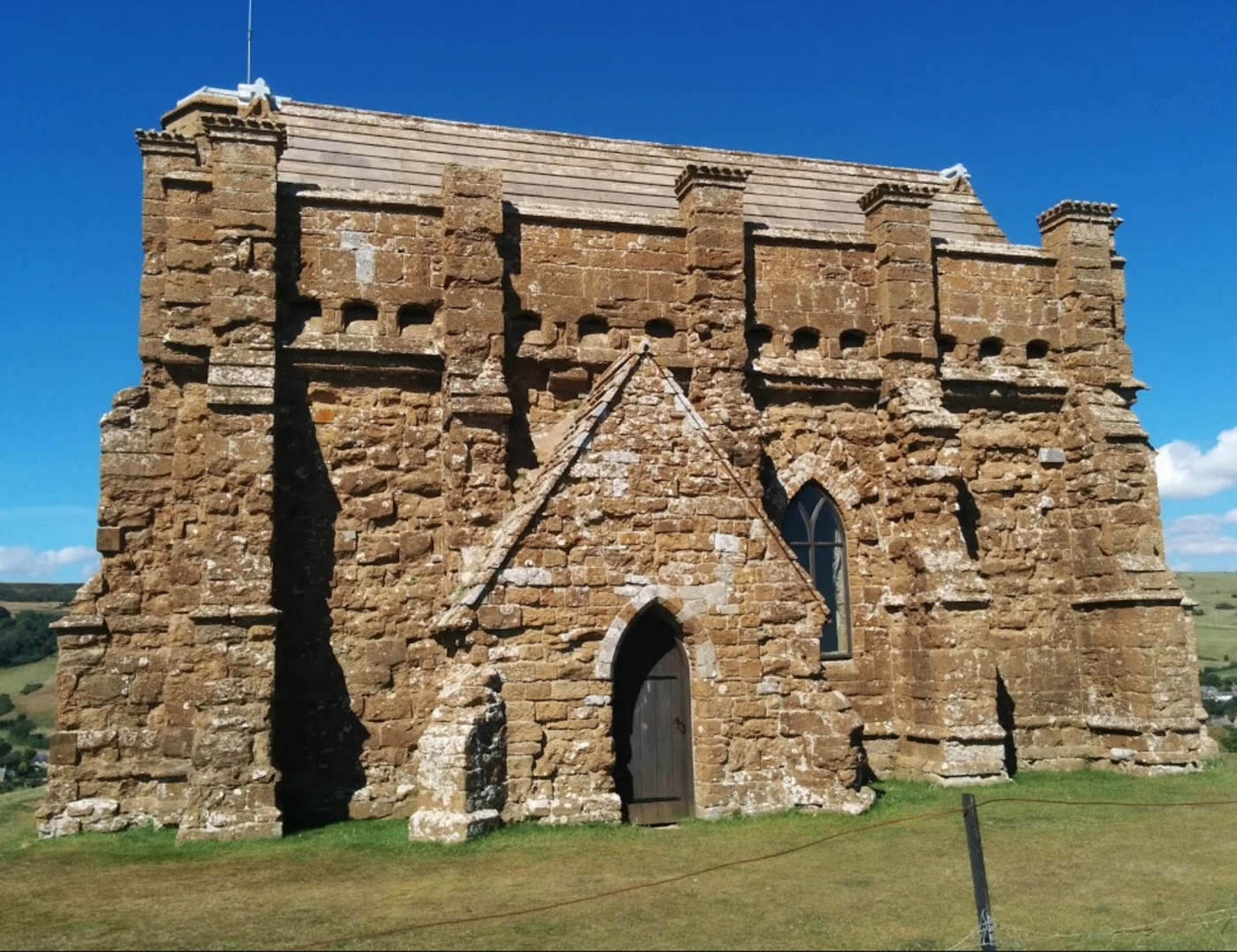
The site was St Catherine's Chapel, Abbotsbury, coordinated on the ground by Clive and Linda Greenslade. Popular write-ups sometimes call the chapel "12th century"; English Heritage dates the standing fabric later (late 14th century in style). What matters for the experiment is the room itself: isolated, small, thick golden limestone, almost no soft surfaces to soak the sound.
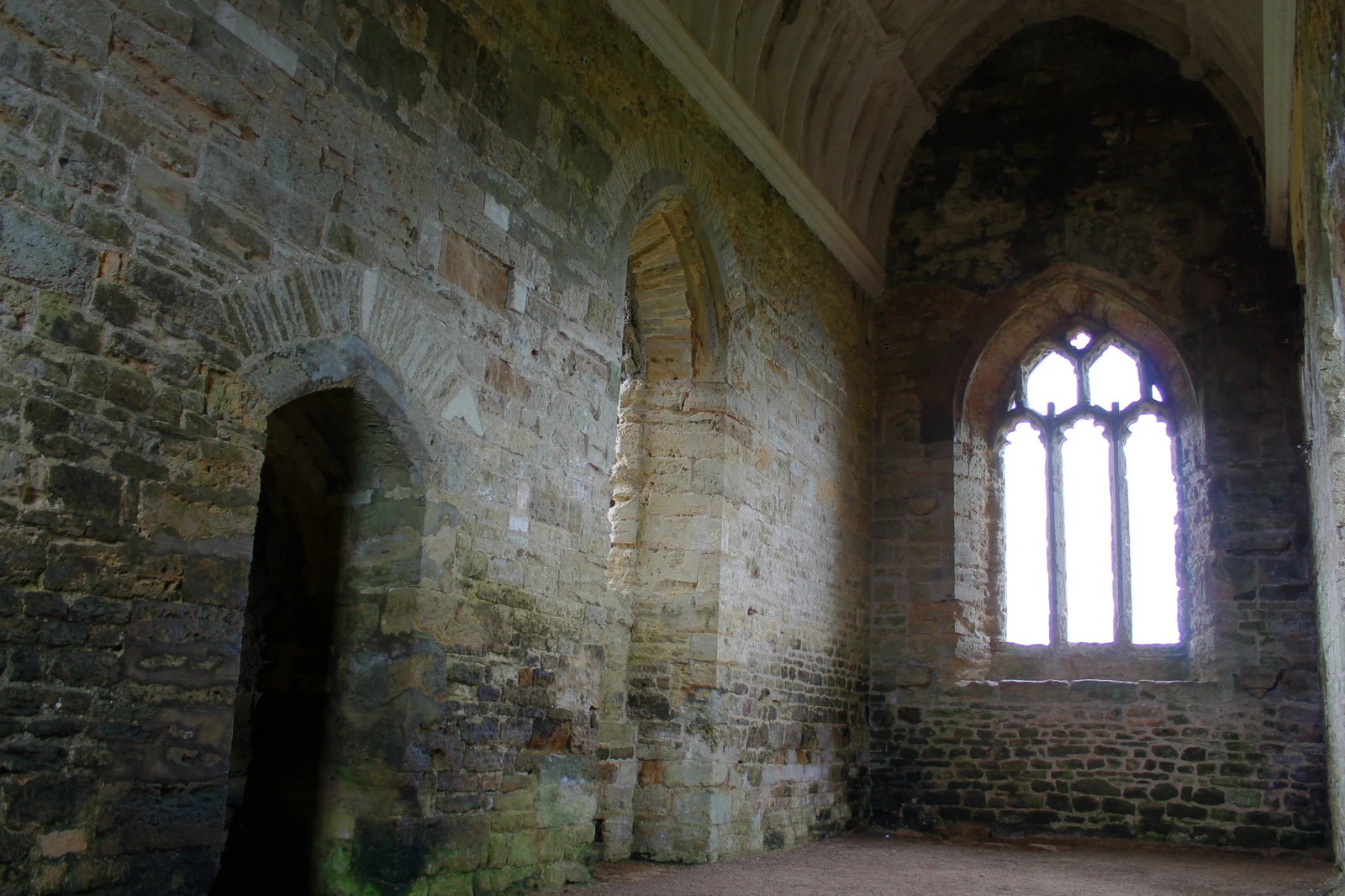
Inside St Catherine's: thick limestone, little ornament, hard surfaces. Clap once and the room answers back.
What they actually did
This is the part most retellings skip. Here is the experiment as Lee reported it from the people running it.
Step one: find the room's note. Reid first identified a prime resonant frequency of the chapel with a pink-noise test - a broad-spectrum sound used to hear how a space responds. He had done a version of that measurement on a previous visit. The idea is simple: every enclosed room has preferred frequencies where energy piles up into standing waves instead of dying away evenly.[5]
Step two: drive the room with a clean tone. Once they had a resonant frequency, they pumped sonic energy into the chamber so it could settle into a stable pattern. In Reid's own framing (as Lee quotes him), if you could see that matrix it would look a bit like a chessboard: squares of high intensity (anti-nodes) and squares of low intensity (nodes). The room was no longer just "echoey." It had a three-dimensional grid of loud and quiet.
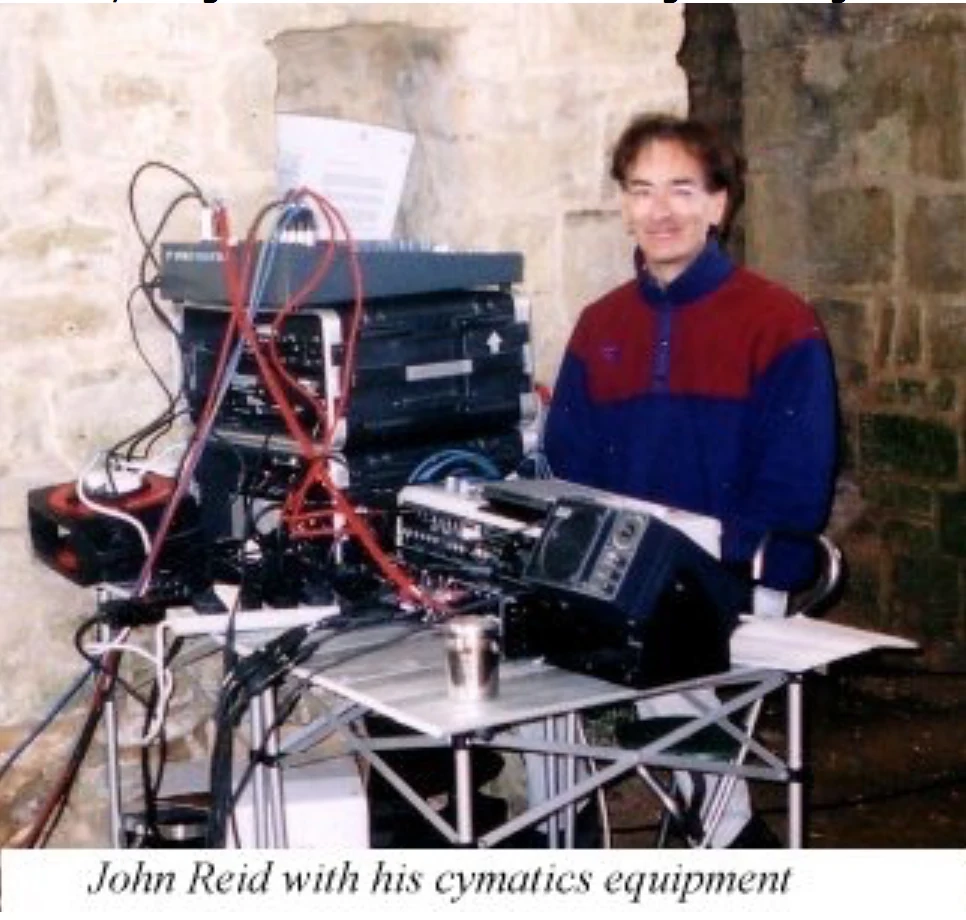
John Stuart Reid with experimental kit used in the chapel cymatics work. Photo from the Cuyamungue Institute account of the Abbotsbury experiments.[5]
Step three: make the pattern visible on a plate. They used cymatics gear - a vibrating surface with a fine medium - so the standing-wave field of the chapel could stamp geometry into sand or powder. Reid was especially interested in a recurring form: a rose - a circle ringed by petal shapes - which he linked to a standing-wave relationship between the length and width of the room. In other words: the shape of the chapel was writing itself into the pattern, not only the frequency on the generator.
Cymatics plate work associated with the chapel experiments - sand and vibration inside the acoustic shell of the stone room.[5]
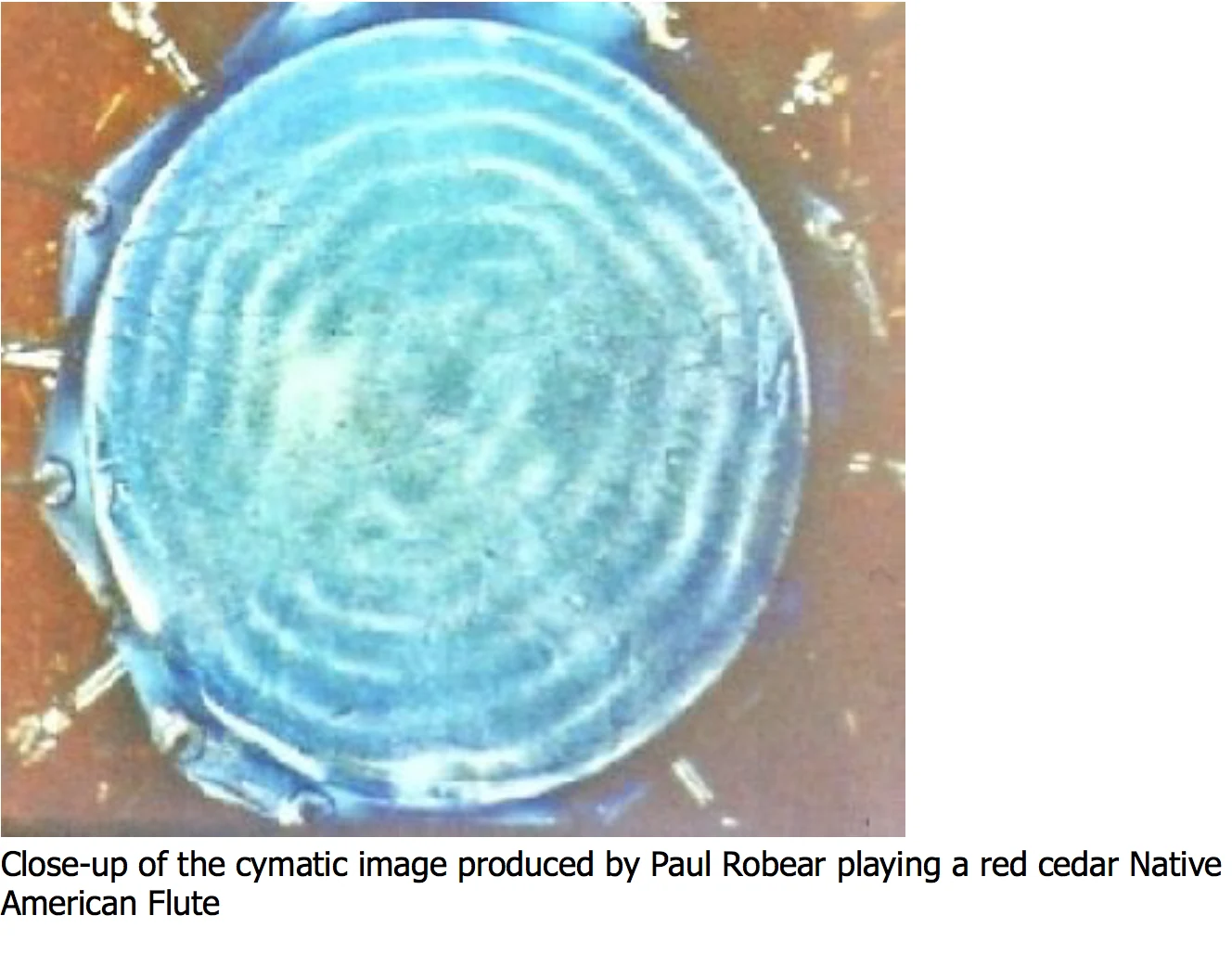
A pattern from the Abbotsbury work: geometry left by vibration in a fine medium. This is the "sound made visible" part of the story in real photographs, not illustration.[5]
Step four: walk the grid with your body. This is the sequence that makes the experiment more than a photo op. Lee describes Reid lining people up and having them move slowly around the room - a procession through what he called a "Wall of Sound." In her words: you could feel the cymatic matrix in three dimensions. Seeing node and anti-node lines on a flat plate is one thing. Feeling them in open air is another.
Take a step. Pause. Feel your body buzz. Take the next step. Pause. Feel the quiet. Keep going around the chapel - start and stop, start and stop - as the invisible loud and soft zones hit you the way they hit the drum head. That is not a metaphor from a blog comment. That is how the participants described the walk.[5]
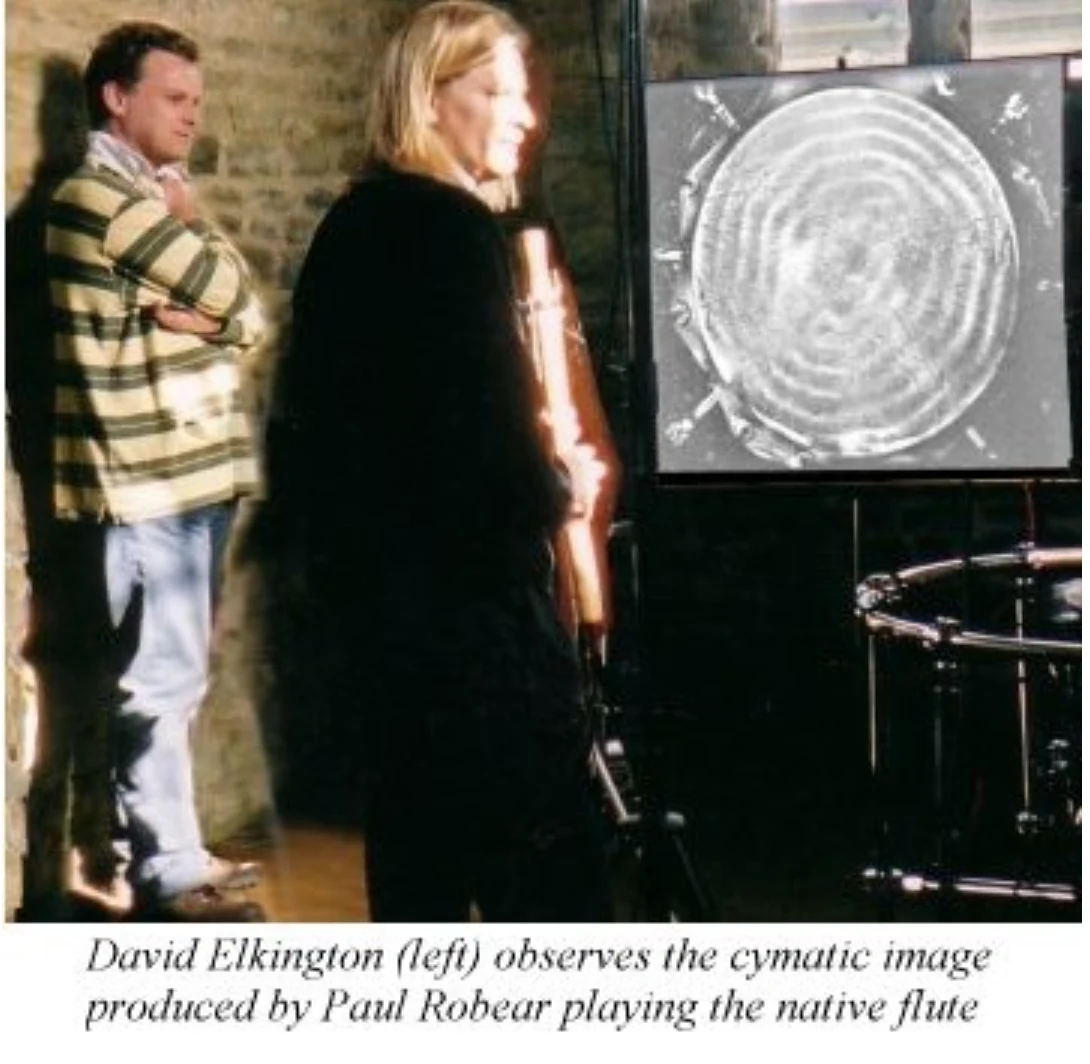
Researchers inside the project - the experiments were collaborative, not a solo lab demo dropped into a tourist site.[5]
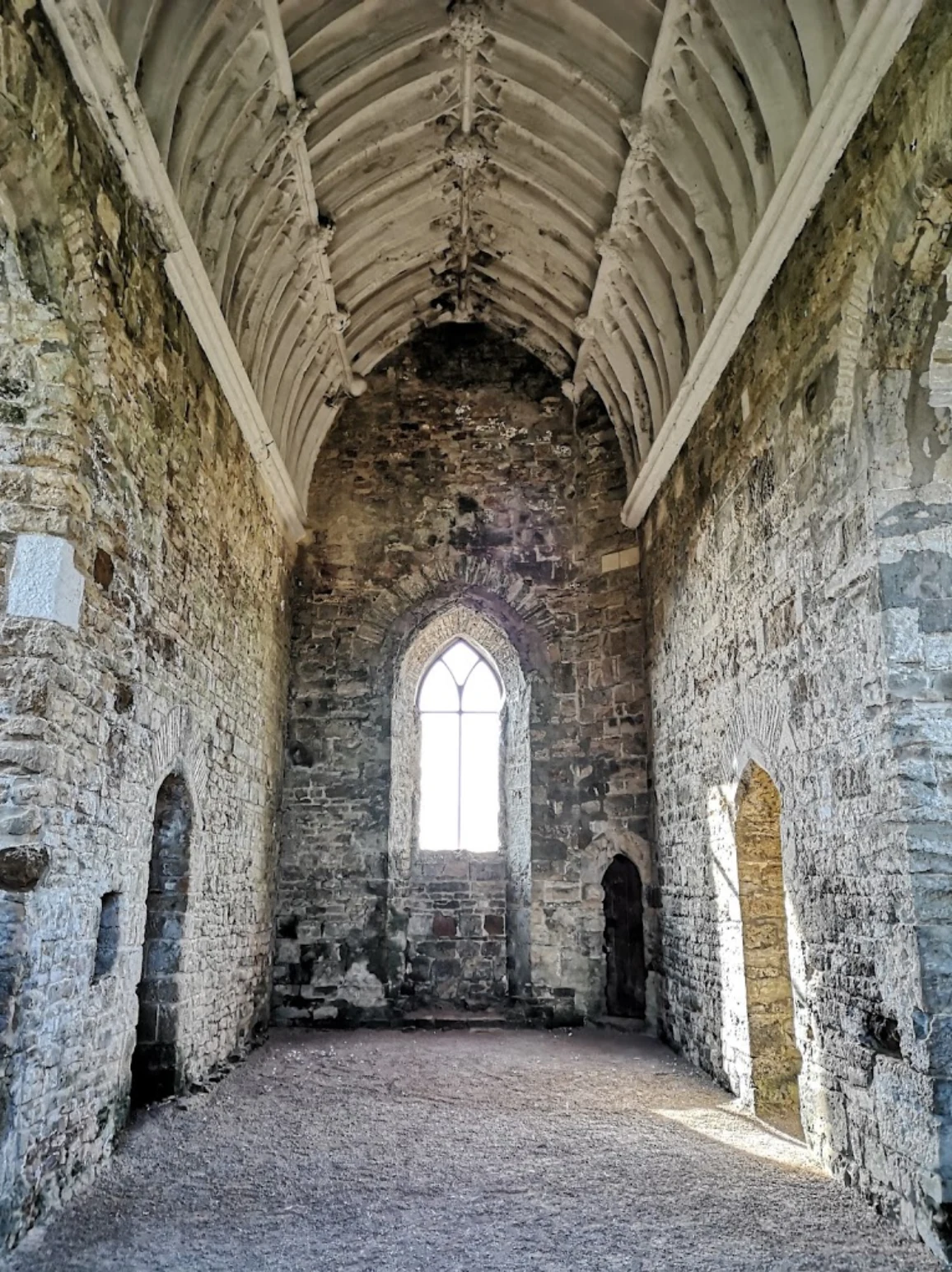
More of the kit and setting from the Abbotsbury sessions - gear in the stone room, patterns on the plate, people in the loop.[5]
Why this room was a good lab
St Catherine's is isolated - less modern noise than a city church. It is small, so a modest speaker can fill the volume. The walls are thick ashlar limestone that bounce mid and high frequencies hard. Soft furnishings are basically absent, so the sound does not get swallowed. English Heritage also notes its history as a Lenten retreat and the folk custom of "wishing holes" in the south doorway, where local women once knelt and asked St Catherine for a husband. Long before the tone generator arrived, people already treated the hilltop as a place you go to focus.[1]
What it does and does not prove
The solid core is straightforward. Cymatics works. Stone rooms have standing-wave patterns. At St Catherine's, researchers drove a resonant tone, watched patterns form on a plate, and walked the node/anti-node field with their bodies until they could feel the loud and quiet zones. That is a real experiment in a real medieval chapel, documented by participants with photos and narrative.
The softer claim - that medieval builders deliberately designed the chapel as a "cymatic machine," or that cathedrals secretly encode vibration science in the modern sense - is a different leap. Masons left stone and custom, not a lab notebook. Online versions sometimes balloon into wilder ideas (DNA, mind control, free energy). The Abbotsbury work does not need those upgrades to stay interesting. A 14th-century limestone room that can stamp a rose into sand and walk a chessboard of vibration through your chest is already enough.
Reid's wider work - pyramid chamber acoustics, the CymaScope, public lectures - lives in the same borderland: careful demos, strong claims about sound as a formative force, and an audience that spans both physics hobbyists and sacred-geometry circles.[6]
For more on how he talks about the field in general:
Video: CymaScope channel - John Stuart Reid, Secrets of Cymatics II.[7]
What sticks
Climb the hill. Open the door. Hear how little furniture there is for the sound to hide in. Then picture the 2002 group with ladders, generators, and sand - measuring the room's note, lighting up a standing-wave grid, watching a rose bloom on a plate, then walking the chapel step by step through buzz and silence.
That is the St Catherine's cymatics story: not a rumor about "cathedrals and vibration," but a specific night (or series of nights) when people made the invisible structure of a medieval room loud enough to feel underfoot.
Sources
- English Heritage. "History of St Catherine's Chapel, Abbotsbury." english-heritage.org.uk
- Grokipedia. "Abbotsbury" (covers hilltop St Catherine's Chapel). grokipedia.com/page/Abbotsbury
- Grokipedia. "Cymatics." grokipedia.com/page/Cymatics
- Nigel Stanford. "CYMATICS: Science Vs. Music." YouTube music/science film. youtube.com/watch?v=Q3oItpVa9fs
- Lee, Laura. "Sacred Soundscape: A 12th Century Chapel Reveals its Sonic Secrets, and a New Theory of Art." Cuyamungue Institute. (Primary narrative of the 2002 Abbotsbury experiments: pink-noise resonance test, standing-wave matrix, plate patterns, walking the node/anti-node field; also source of project photographs used in this article.) cuyamungueinstitute.com
- CymaScope / John Stuart Reid. About page and research context. cymascope.com/about
- CymaScope. "Secrets of Cymatics II, a lecture by John Stuart Reid." YouTube. youtube.com/watch?v=K8w_frOvfGo
Further rabbit holes
← Back to 🎶 vibrations
Related: King's Chamber acoustics, Hans Jenny's films, Rosslyn "musical cubes" claims, and why empty stone rooms still mess with your nervous system.